Some might argue that there are more important types of massage to experience.Our back hurts, our head is sore, and our neck is always creaking, but those in the know understand that all our body's unique pains and aches originate from our feet.Our feet are the foundation of our musculature and bone structure, and we engage with the world through them.A Ferrari won't run with flat tires, and neither will your body when your feet are tired and sore.Learn the basics of massage technique and then give your partner a real treat!Physiologically, feet are the foundation for proper knee alignment, hip, and lower back placement.Most doctors prescribe orthotics for your shoes when your back or hips are feeling out of sorts.And since your feet are so important, keeping them happy can lead to a greater sense of well-being throughout your whole body.And because the tendons, ligaments, and muscles are constantly worked over years of serious usage, massaging your feet can actually help keep them strong for years to come.On the other hand, foot massages can also be one of the most pleasurable types of bodywork.More than any other part of your body, your feet connect to a myriad of pleasure centers and are, according to acupuncturists, connected to multiple, seemingly unrelated, aspects of your health.So break out the foot cream.Find yourself a generous lover/partner/friend, or even by yourself, and tend to those poor feet.They do so much for you, do something back and show them that you care.
Circulation
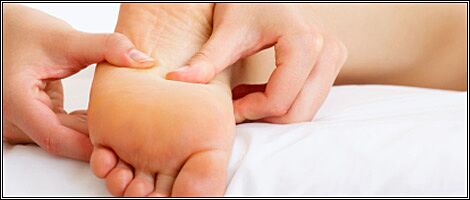
Since our feet take such a beating in everyday life, the first thing to do is get the blood flowing to them.Blood brings our muscles all the nutrients they need, so helping our feet's circulation is key to their recovery.Thus, the first stroke in a good foot massage is called a circulation stroke.The name implies that it increases blood flow in the tissues of the foot.Grasp the foot with one hand and stroke the top with the other.You can use light pressure along the top of the foot.Moderate pressure might be required on the bottom of the foot to prevent tickling your partner.Continue rubbing and stroking your partner's entire foot.Twenty times on the top and ten times on the bottom is suggested.
Foot Rotation
Don't forget about those ankles.They take as much of a beating as your feet and are interconnected.So the next two techniques are going to deal specifically with the ankle and its relationship with the foot.This rotation is not a stretch; it is just a movement to relax the foot and ankle.Support the foot with one hand.With the other hand, gently move the foot through its natural range of motion.Simply and slowly glide the foot in an oval-type motion.As you slowly rotate the foot, you may find the range of motion increases slightly.It's important to note that there is bone and cartilage in the ankle joint, so only move the ankle as far as it permits; stop if you hear any grinding or crackling.Rotate the foot 3-5 times in each direction.
Stroking the Foot and Ankle
This stroke seems to relax the whole body.Start with your fingertips right where the toes meet the foot.Use both hands to press down between the bones of the foot.Slide your hands up the foot toward the ankle; when your fingers reach ankle level, wrap your fingers around the ankle and massage the front of the ankle joint with your thumbs.We generally look for muscle tissue to rub when giving a massage.This area is firm with bone, tendons, and ligaments.Try your best to treat the muscle tissue you find with thorough kneading.
Flexing and Rotating the Bones of the Foot
This stroke feels really nice when the top of the foot is sore from standing or walking.Press the heel of each hand on the outer edges of the foot.When you curl the foot, you'll be able to massage the muscle between the bones with your thumbs.While curling the foot, pressing your fingertips into the underside of the foot will be greeted with oohs and ahhs.
Pulling of the Toes
This can feel good, but be careful.Don't try to pull the toes too hard.Gently pulling the toes out can free up range and give them a sense of mobility and rejuvenation.Try this in conjunction with a foot bath, as warming the toes can make pulling them more enjoyable and easier.Remember, the point of pulling the toes is not to hear them pop.Simply pulling them will be good enough, but if they pop, don't worry—just don't force them.
'Soul' Work
The most muscular part of your foot is the bottom, which has pads to protect the bones.When working on yourself, this is easiest with your foot propped on the opposite knee, with a towel underneath to protect your clothing from cream.If working on a partner, place their foot either on your knee or prop it on a chair with some pillows under it.Using your thumbs, make circular motions that cover the entire surface of the bottom of your foot, moving from the base of your toes toward your heel.Keep the pressure of the circles steady and even.Use a bit more firmness on your heels; the skin here is tougher.Once you have gone over the entire foot, give a few extra strokes to any area where you experience chronic pain—the ball of your foot, the arch, or perhaps around your ankles.One way to relieve cramping in the arch is to hold gentle pressure with one hand and stretch your foot with the other, but not to the point of pain, just to muscle resistance.Make sure that you don't hurt yourself or your partner.This part of the foot can be sensitive, and digging in too aggressively can hurt—this is supposed to be relaxing!
Bath 'em and Polish 'em
At your local health food store, you will inevitably find salts and bath oils specifically designed for foot baths.The heat from the water can loosen muscles, and the salts can soothe the skin while their scent relaxes the mind.Let them sit until they prune; that way, you know that your skin and muscles have been saturated in the warmth.Doing this regularly can increase the vitality of the tendons and integral portions of the foot.Filing is something that people don't do often enough.This can be done in conjunction with a bath, as the skin is softer and more malleable.Use a large pumice stone to remove the buildup of calloused skin and dirt that can get ingrained in the skin.This is not just an aesthetic exercise.By reducing calluses, you can even out your gait and prevent cracking, which is especially important during the summer when we tend to go barefoot and wear sandals more often.Socks help keep our feet moisturized, but callous buildup prevents moisture from reaching our skin.Take care of your feet, and they will take care of you.